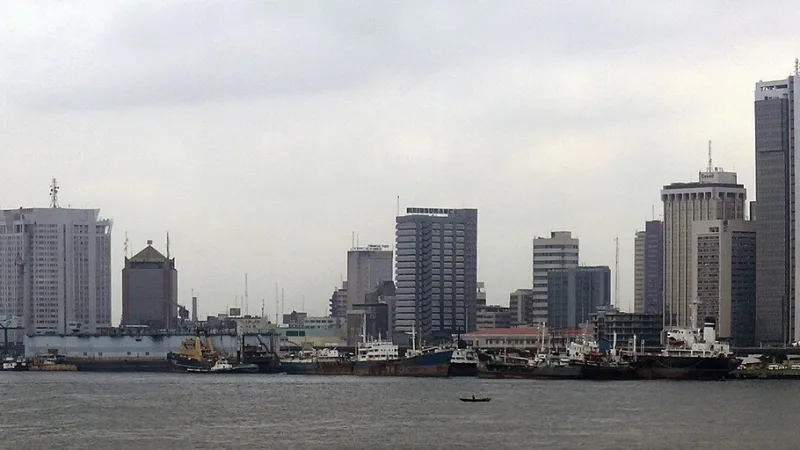
The Johannesburg Stock Exchange is Africa's dominant equity market — larger than every other exchange on the continent combined, on most published measures. For an investor used to Accra, Lagos or Nairobi, it operates less like a bigger version of a frontier market and more like a developed one that happens to sit in Africa.
That distinction shapes everything else in this guide.
What makes the JSE different
Three characteristics set it apart from its African peers:
- Depth. Large listings trade continuously in meaningful size. Liquidity, the binding constraint on most African exchanges, is not the first problem you encounter here.
- Global constituents. Several of the largest companies listed in Johannesburg earn most of their revenue outside South Africa and are dual-listed, often in London. Buying the index therefore gives you less South African economic exposure than you might assume.
- Institutional infrastructure. A long-established regulatory framework, extensive analyst coverage and a well-developed derivatives market.
The second point is the one most often missed, and it matters enough to restate: the JSE is not a clean proxy for the South African economy. A significant part of its value sits in companies whose fortunes depend on consumers and commodity buyers elsewhere.
The indices
| Index | Covers |
|---|---|
| FTSE/JSE All Share | The broad market — the headline index most often quoted |
| FTSE/JSE Top 40 | The largest listings by capitalisation; dominated by global and resource names |
| Resources, Financials and Industrials indices | Sector segments, useful because they behave very differently |
Watching the sector indices separately is more informative on the JSE than on smaller exchanges, because the sectors genuinely diverge. Resources respond to global commodity prices and Chinese demand; financials to domestic interest rates and credit conditions; industrials to a mix of both. A flat All Share index can conceal a large rotation between them.
Current levels and the day's movers are on the live JSE board, alongside the five other exchanges on our markets overview.
The two-economy problem
A useful way to think about JSE exposure is to split listed companies into three groups:
- Rand hedges. Companies earning in foreign currency and reporting in rand. When the rand weakens, their reported earnings rise. Their share prices often move inversely to the currency.
- Domestic South Africa. Retailers, banks, telecoms and property focused on the local consumer. These depend on South African growth, employment and interest rates.
- Resources. Mining houses whose fortunes track commodity prices in dollars, largely independent of local conditions apart from production costs and electricity supply.
These three groups can move in opposite directions in the same week. An investor who buys "the JSE" without knowing which group dominates their holding has taken a position they have not defined.
Risks specific to this market
Currency. The rand is among the most actively traded emerging-market currencies, which makes it a global proxy for emerging-market risk. It moves on events with no South African content at all. For a non-rand investor this is half the return — see comparing African currencies.
Electricity supply. Constraints on generation capacity have been a recurring drag on South African economic activity and on the operating costs of industrial and mining companies. It is a genuine, company-level operational risk, not merely a macro talking point.
Concentration at the top. The Top 40 is heavily weighted toward a small number of very large companies. Index exposure is therefore less diversified than the number of listings suggests — the same capitalisation-weighting effect we describe in market capitalisation explained.
Global sentiment. Because the JSE is accessible to foreign capital, it participates fully in global risk-on and risk-off episodes. This cuts both ways: more liquidity, more imported volatility.
How to access the market
As on any exchange, trading goes through a member firm. South African brokers are authorised by the exchange and regulated by the Financial Sector Conduct Authority.
For an investor based elsewhere in Africa, the practical routes are:
- A JSE member firm directly, where it accepts non-resident clients.
- An international broker offering JSE access.
- A collective vehicle — a fund with South African or pan-African equity exposure, bought through a licensed manager in your own country. For a smaller investor this is usually the simplest route.
Cross-border investing raises account-opening, custody, tax and repatriation questions that differ by jurisdiction and change over time. Confirm the current position with a licensed broker or adviser in both countries before committing funds. Our directory of licensed institutions includes regulated South African firms; verify any firm's current authorisation with the FSCA.
Reading the JSE if you are used to a frontier market
Four adjustments to your habits:
Liquidity is no longer the main constraint. On large caps you can generally transact at the quoted price. The caution about market orders that applies on the GSE applies much less here — though it still applies on small caps.
Information is abundant. Extensive analyst coverage means public information is already reflected in prices to a far greater degree. The edge available from simply reading an annual report that nobody else has read is largely absent.
Sector matters more than the index. As above. Decide which of the three groups you want.
Valuations are comparable internationally. JSE companies can be assessed against global peers on the same metrics, which is both an opportunity and a discipline. The methods in analysing financial statements transfer directly.
Frequently asked questions
Is the JSE a good proxy for the African economy?
No. It is dominated by South African and globally operating companies, and South Africa's economy differs substantially from most of the continent. Pan-African exposure requires several markets — our markets overview tracks six.
Can I buy JSE shares from Ghana or Nigeria?
Generally yes, through a broker that accepts non-resident clients or via an international platform or fund. The documentation, tax treatment and repatriation rules vary and should be confirmed with a licensed firm before you commit.
Why does the JSE sometimes rise when South African news is bad?
Because of the rand-hedge effect. Bad domestic news can weaken the rand, which raises the rand-reported earnings of companies that earn abroad — lifting a large part of the index.
What are the trading hours?
The exchange publishes its trading calendar and session times, which change around public holidays. Check the JSE's own website rather than relying on a third-party figure.
In short
The JSE is a deep, liquid, internationally integrated market that sits in Africa without being especially representative of it. Decide whether you want rand hedges, domestic South Africa or resources, because those three behave quite differently — and remember that for a non-rand investor the currency is half the outcome.